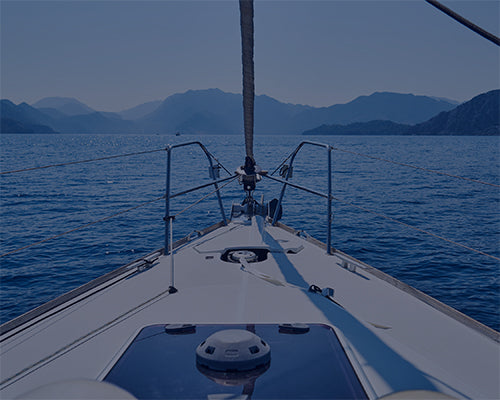


How to Polish, Clean, and Protect Boat Glass in 3 Steps
By the DiTEC Marine Team · Last updated: September 2026 · 5 min read
The short answer
Polish, clean, then protect. Use G200 to remove water spots and light scratches, Crystal Clear to strip away oils and residue, and Glasstec to seal the glass with a hydrophobic coating. Glasstec provides up to one year of protection, so salt, calcium, and mineral deposits cannot bond to the glass and cleanups get faster and less frequent.

The DiTEC Glass Care Kit: everything for all three steps in one box.
Salt spray, hard water, and wiper wear take a toll on boat glass fast. Spots bake on, scratches build up, and your view from the helm gets cloudier every season.
The goal of the DiTEC glass care system is simple: a treated, protected surface that contaminants cannot stick to, which makes cleaning easier and needed less often. Here is how each step works.
Step 1: Polish with G200
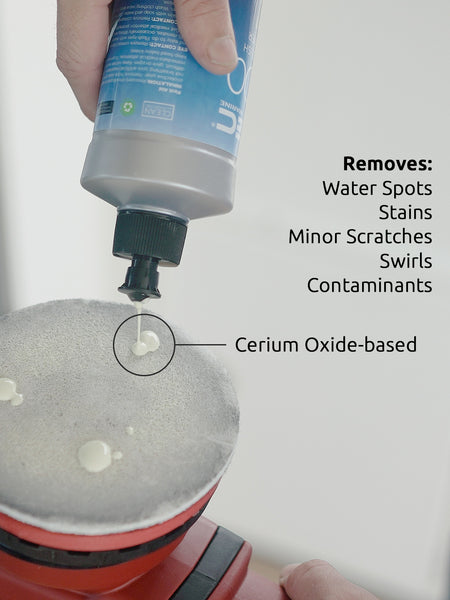
Start with G200, a cerium oxide-based glass polish that blends ceramics, mild abrasives, and nano components. Paired with the Glass Polishing Pad, it removes water spots, stubborn stains, and most light scratches.
G200 takes out fine to medium wiper scratches and swirls without distorting the glass, a common problem with traditional cerium oxide compounds.
Pro tip: keep the surface wet while you polish so the glass does not overheat. Run a rotary polisher at 1,000 to 1,500 RPM or a dual action polisher at 3,000 to 4,500 OPM.
Step 2: Clean with Crystal Clear
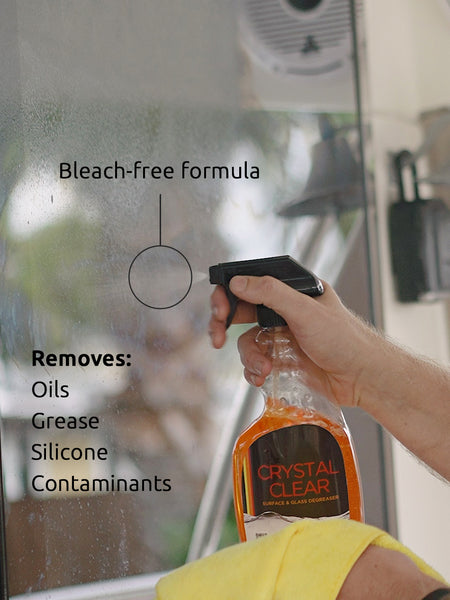
Next, use Crystal Clear, a detergent-free pre-cleaner for glass, paint, and other glossy surfaces. It removes oils, grease, silicone, dirt, and polish residue.
Do not skip this step. Glasstec has to bond directly to bare glass. If any contamination is left behind, the coating will not bond properly.
Step 3: Protect with Glasstec
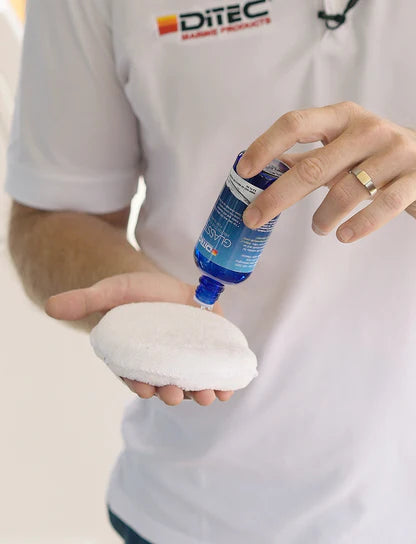
Finish with Glasstec, a long-lasting protective coating made for glass. It forms a hydrophobic, water-repellent layer that stops salt, calcium, and mineral deposits from bonding to the surface.
Glasstec provides up to one year of protection. Areas that wipers rub against wear faster and will need to be reapplied sooner.
A little goes a long way. The 3.2 oz. bottle covers up to 400 sq. ft. of glass, and the 32 oz. bottle covers up to 4,200 sq. ft.
Get all three steps, plus pads, in one kit.
Shop the Glass Care KitWatch the system in action
Video: how Glasstec coats glass and makes water bead off.
Which step fixes which problem?
| Your glass problem | Product | What it does |
|---|---|---|
| Water spots, stains, wiper scratches | G200 + Glass Polishing Pad | Polishes them out without distorting the glass |
| Oily film, silicone, polish residue | Crystal Clear | Leaves bare, clean glass ready for coating |
| Salt and mineral buildup that keeps coming back | Glasstec | Hydrophobic barrier, up to one year |
Which is right for you?
- Spotted or scratched glass: run all three steps. The Glass Care Kit includes G200, Crystal Clear, Glasstec, two felt polishing pads, and two microfiber applicator pads.
- Clear glass with no spots or scratches: skip the polish. Prep with Crystal Clear, then coat with Glasstec.
- Already coated with Glasstec: keep up with routine cleaning and reapply Glasstec when water stops beading, starting in the wiper areas.
Shop the glass care system


Polish it. Clean it. Protect it for up to a year.
Three steps now means less scrubbing all season.
Shop the Glass Care KitFrequently asked questions
How do I get water spots off my boat windshield?
Polish them out. Mineral spots that have baked on usually will not come off with a regular glass cleaner. G200 on a glass polishing pad removes water spots and light scratches. Then seal the glass with Glasstec to keep new spots from bonding.
How long does Glasstec last?
Up to one year. Areas with mechanical wear, like the path of your windshield wipers, will wear faster and need reapplying sooner. When water stops beading, it is time to reapply.
Can G200 remove scratches from boat glass?
Yes. G200 removes most fine to medium wiper scratches and swirls. Keep the surface wet while polishing to prevent overheating. Deep scratches may need professional glass repair.
Do I need to polish before every Glasstec application?
No. Polish only when the glass has spots, stains, or scratches. What you can never skip is Crystal Clear, because Glasstec only bonds to fully clean glass.
How much glass does one bottle of Glasstec cover?
The 3.2 oz. bottle covers up to 400 sq. ft. of glass. The 32 oz. bottle covers up to 4,200 sq. ft., sized for large yachts and professional detailers.
I already used a silicone water repellent on my glass. Can I still switch to Glasstec?
Yes, but remove the old product completely first. Crystal Clear removes silicone, oils, and grease. On heavily coated glass, polish with G200 first. Any residue left behind will stop Glasstec from bonding.
Keep learning: read the full Boat Detailing and Cleaning Guide. For new guides and seasonal care reminders, join the DiTEC newsletter at the bottom of this page.
Sources cited:
- Cerium(IV) oxide: its use as the standard abrasive for polishing glass.
- DiTEC Marine Products, Glasstec product page: up to one year of protection, reduced life in wiper areas, coverage per bottle, and the requirement to decontaminate first.
- DiTEC Marine Products, Crystal Clear, G200, and Glass Polishing Pad product pages: contaminant removal, polishing speeds, and keeping the glass wet to prevent overheating.