

Quick Answer
Hurricane prep for boats has two parts: a surface-protection layer applied early in the season, well before any active forecast, and a thorough wash-down once it's safe to return to the vessel. Marine coatings cure over days to weeks — they only deliver their full protective benefit when they are already in place before the weather arrives. Last-minute application does not work and should probably not be on your list of priorities when bad weather hits!
By the DiTEC Marine Team · Last updated: June 2026 · 4 min read
Safety First
This is a boat-care article, not a hurricane safety guide. For evacuation orders, shelter information, and active storm tracking, follow the National Hurricane Center and your local emergency authorities. People come first. Surfaces can be restored.
Atlantic hurricane season officially opens June 1, and for owners along the Gulf, the Atlantic, and Florida, that's the start of months of close attention to forecasts, evacuation plans, and community preparedness. This article addresses one specific piece of that picture: how to protect your boat's surfaces so that a storm event doesn't leave behind permanent corrosion, fading, and staining on the materials underneath.
The most important point to understand up front: the work below is season-long work, not forecast-window work. Marine protection coatings cure over days to weeks, and their full performance depends on being applied well in advance of any active weather. By the time a storm is named, the surface-protection layer should already be in place — your attention belongs to your family, your home, and the guidance of the National Hurricane Center, not to your boat.
1. Why Surface Protection Is Season-Long Work
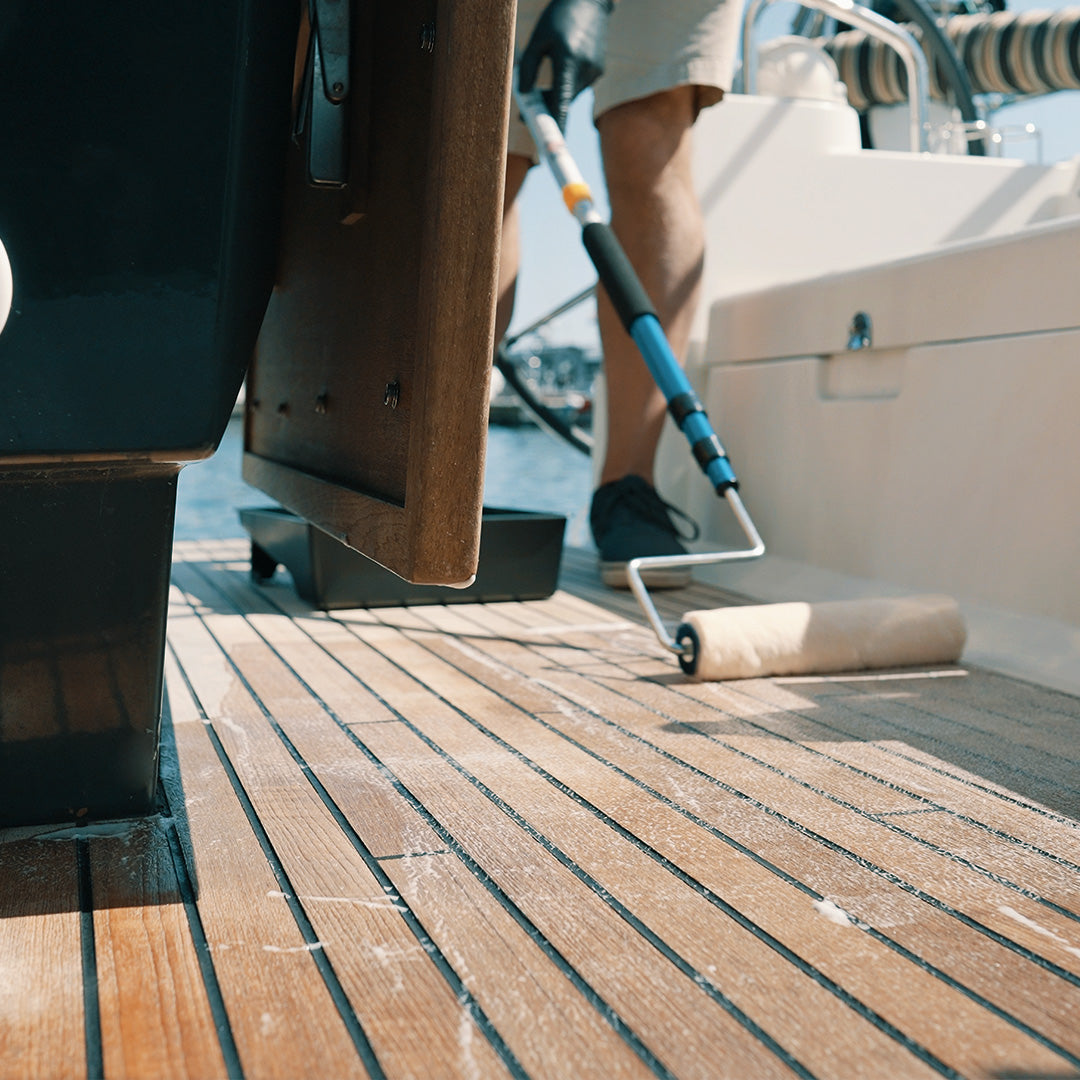
Most marine surface protection products are not designed for the panic window. PROTEC 1 cures over several days. Triton 2.0 reaches full bond strength after a multi-day cure on clean teak. Glasstec needs an undisturbed cure period to form its molecular bond. Applied in the 24 hours before a forecast event, these products do not deliver their full protective benefit — and the time spent applying them is time that almost always belongs to evacuation, family communication, or securing your home.
Done early — at haul-out, at first launch, or during routine maintenance days in May or early June — the same products create a continuous protective layer that is already in place when conditions deteriorate. Hurricane-force winds drive salt mist into every gap and seam. That mist dries on hot surfaces in minutes, leaving behind concentrated salt crystals that draw moisture and accelerate corrosion long after the storm has passed. Unprotected teak swells, absorbs contaminants, and oxidizes — which is exactly the problem Triton 2.0 is engineered to prevent. Metals pit. Gelcoat dulls. A protective layer turns those problems into a wash-down job once you're back on the boat. The absence of one turns them into a refit.
For a deeper read on the chronic-exposure version of this problem, see our Salt Mist Survival Guide. The principles are the same — hurricanes just compress months of corrosive exposure into a single event.
2. Protect Painted and Gelcoat Surfaces Early

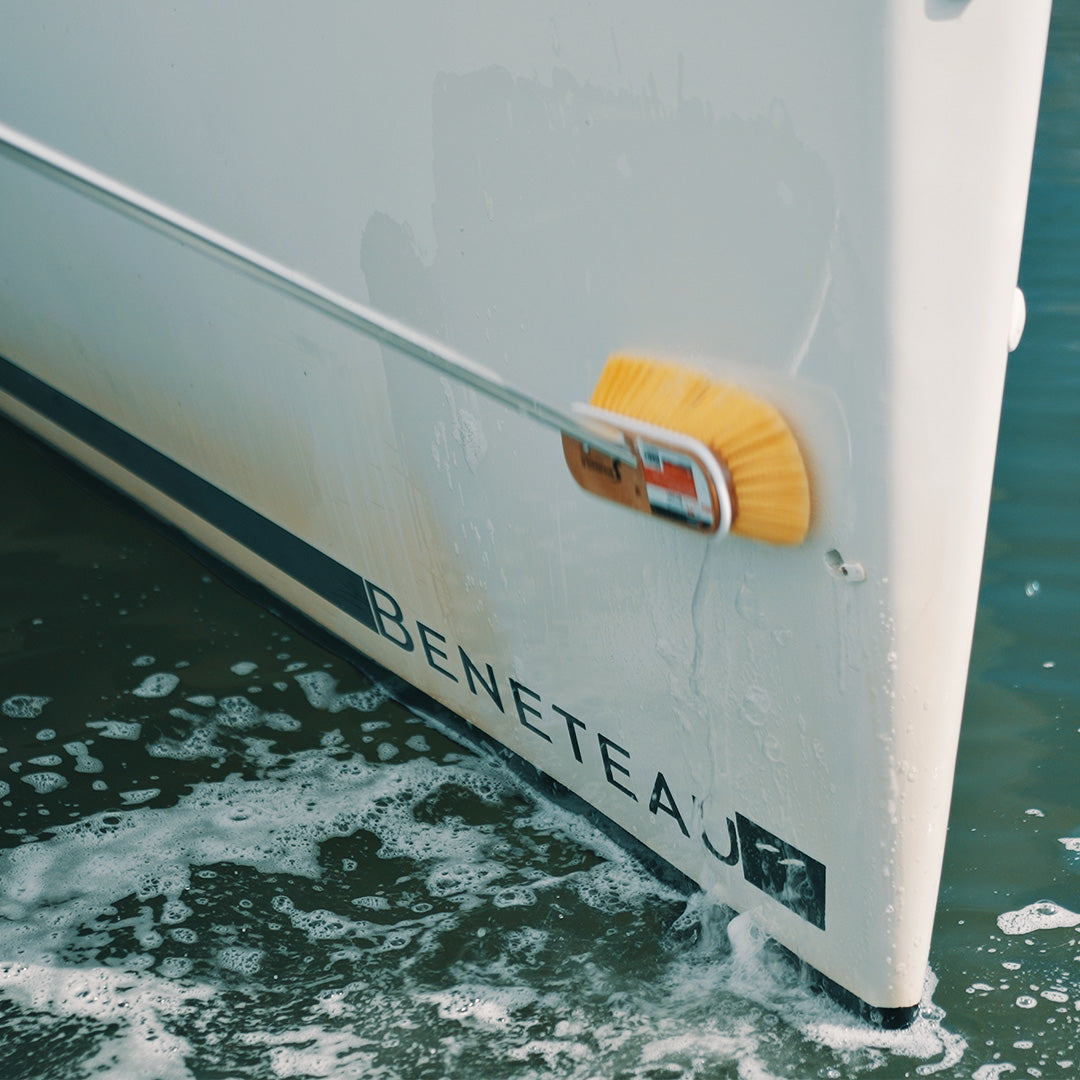
A paint and gelcoat protector is the foundation of pre-season surface protection. Once cured, a protected surface sheds saltwater, repels contaminants, and resists abrasion from wind-driven debris far better than bare gelcoat.
Traditional waxes wash off in the first hour of a serious storm. Most rigid ceramic coatings can crack under the flex of a vessel taking heavy wave action. PROTEC 1 is neither — it flexes with the substrate and creates a long-lasting hydrophobic barrier that holds up under exactly the kind of stress hurricanes produce.
- Apply at the start of the season — coatings only deliver full protection after they've fully cured
- Reinforce high-exposure areas (bow, foredeck, transom) with a top layer of PROTEC Quick Coating for added water shed
- The Paint/Gel Protection Kit bundles both plus Crystal Clear for a complete season-opening pass
Why this matters
Surface protection works as a sacrificial layer because storm damage hits the coating instead of the gelcoat underneath. That only works if the coating is fully cured before the weather arrives, which is why this is start-of-season work, not last-minute work.
3. Seal Teak, Glass, and Metal Hardware
Teak, glass, and stainless hardware each behave differently under storm conditions, and each needs its own protection layer.

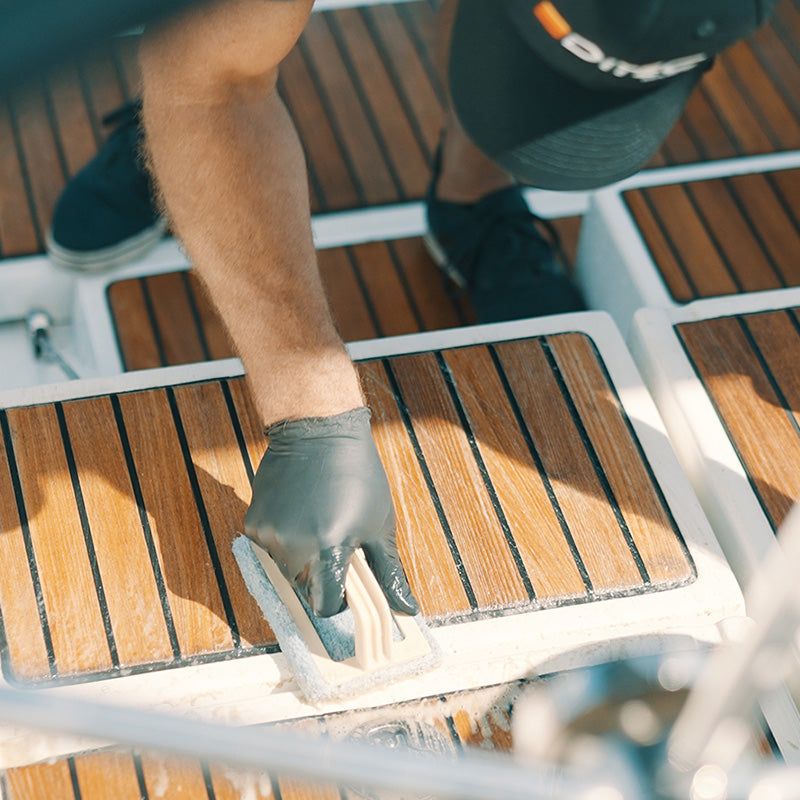
Teak is the most vulnerable surface on the boat. Bare teak absorbs salt and contaminants directly into the grain during heavy spray exposure, which is what causes the greying, blackening, and deep-set fading that owners spend the rest of the season trying to reverse. Triton 2.0 creates a nanotechnology-based seal that prevents that absorption for 4–6 months in covered areas and 2–4 months in full sun — long enough to carry teak through the heart of hurricane season and the heavy-use months that follow. Apply Triton after a clean with Teak Clean or Teak Magic — never to dirty teak, or you'll seal in the contamination. Triton also keeps decks measurably cooler than oil-treated surfaces, which matters in the high-UV summer months.
Glass exposed to wind-driven salt and debris ends up with mineral spotting and fine scratches that distort visibility for the rest of the season. Glasstec creates an inorganic molecular bond that defends against salt, calcium, and UV for up to a year. The hydrophobic surface also sheds water during the storm itself, which means less mineral deposition on hot windshield glass during summer thunderstorms.

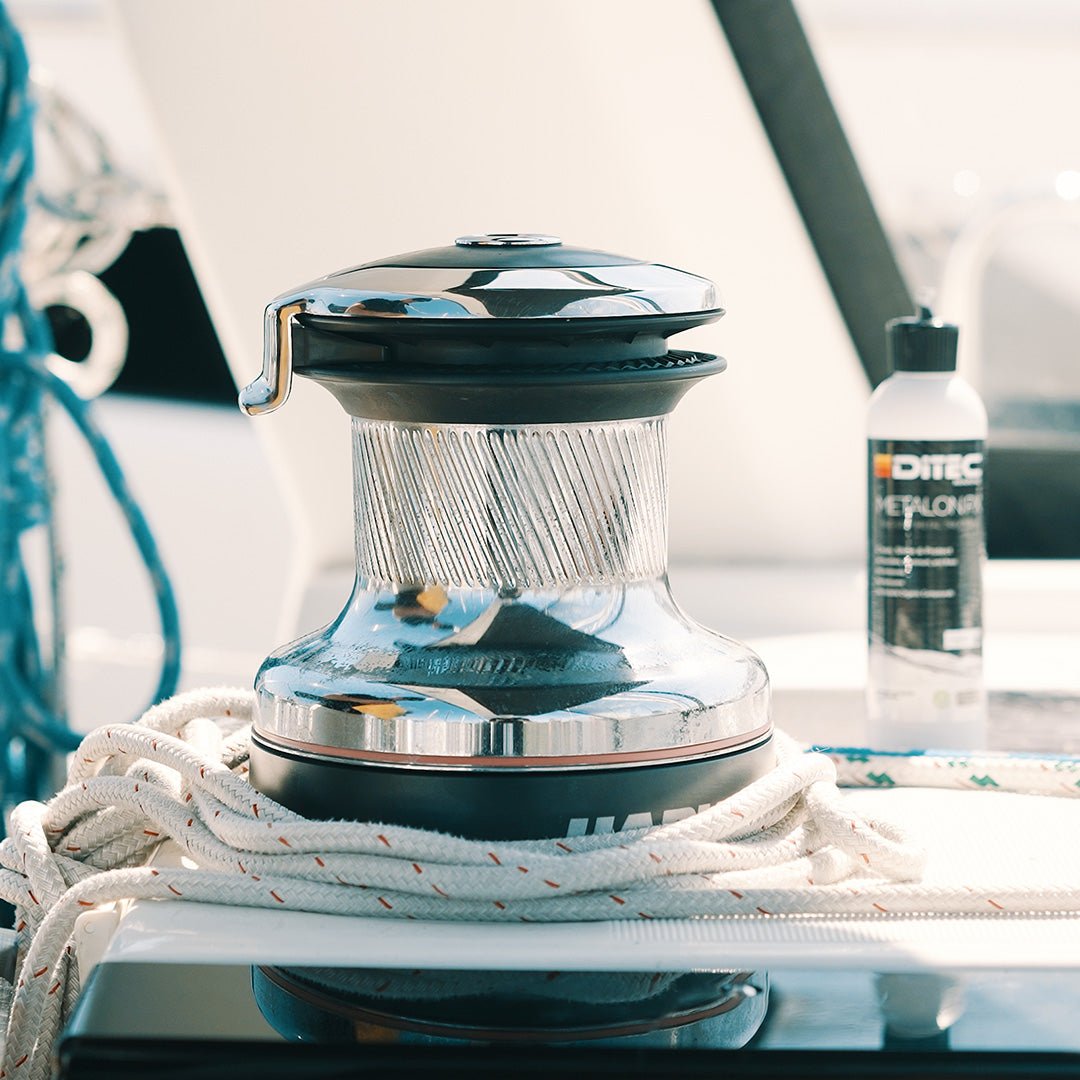
Metal hardware — rails, cleats, anchors, hinges, fittings — is where post-storm corrosion shows up first. Stainless steel can spot and pit within 24 hours of heavy salt exposure if left untreated. Metalon PX polishes and protects in a single pass and is one of the quickest steps on the list. A 15-minute walk-around during any routine maintenance day at the start of the season covers most boats.
4. Don't Skip Soft Surfaces
Vinyl seating, upholstery, canvas, and rubber seals are the surfaces that quietly degrade fastest in a major storm. Even if the canvas comes off and the seats get covered, residual saltwater finds its way in — and the summer UV that follows bakes that salt into the material.
MVP is built for exactly this — a protectant for vinyl, rubber, and upholstery that adds both UV resistance and water repellency without leaving the greasy residue that traditional vinyl dressings produce. Apply early in the season to anything that stays on the boat: helm seating, cushions exposed to overspray, rub rails, and any rubber seals around hatches and windows.
Canvas that gets stowed should still be cleaned and dried fully before storage. Salt locked into damp canvas under a hatch is the most common cause of mildew complaints in the weeks following a storm.
5. When It's Safe to Return to the Boat
Many owners have more important things to attend to in the immediate aftermath of a major storm — their home, their family, their community. The work below begins when access to the vessel is safe and authorized, and when other priorities allow. There's no scoreboard on this; take care of yourself and the people around you first.
Once you're back on the boat, the standard cleaning sequence still applies. The longer salt sits on hot surfaces, the harder it is to remove — but a thorough wash within a reasonable window of your return is what matters, not a precise hour count from when the storm cleared.
Step 1: Full wash-down. Elite Boat Wash is the right tool for this — a ceramic-safe, MARPOL-compliant boat wash that won't strip the PROTEC layer underneath, and a true pH-neutral formula even at full concentrate. One gallon makes 128 gallons of wash, which is enough for the multiple passes a post-storm clean usually needs.
Step 2: Waterline and hull. Storm surge typically leaves a heavy organic and mineral band at the waterline — algae, mud, and debris driven up from disturbed bottom sediment. Hull & Bottom Cleaner is a safe acid wash that dissolves organic growth and waterline discoloration without harsh chemicals — readily biodegradable, safe to discharge with wash water, and effective on hardened metals, anchors, and propellers that picked up rust from the storm. Do not use on bottom paint or antifoul paint.
Step 3: Re-seal teak if needed. A pre-season Triton 2.0 application carries most teak surfaces through a storm intact, but heavy direct exposure on bow caps, rails, and swim platforms can wear the protection thin. Inspect during the wash — if water no longer beads cleanly off the teak, clean with Teak Clean or Teak Magic and re-apply a fresh coat of Triton to restore the seal before the summer UV sets in.
Step 4: Hardware inspection. Walk every metal fitting on the boat in the days following your return. Salt spots that show up early can be polished out with Metalon PX before they become pits. Pits don't polish out.
A note on timing
Salt that sits on hot, sun-baked surfaces for an extended period becomes a polish job rather than a wash-down job. The pre-season protection layer buys you time, but it doesn't replace the wash. Begin when it's safe and authorized to return to the vessel — not before.
The Bottom Line
Hurricane preparedness is, first and foremost, about people. The boat protection layer described in this article is a small piece of a much larger picture — one that begins with evacuation plans, family communication, and following the guidance of the National Hurricane Center and local authorities.
For the boat itself, the goal of this work is straightforward: do the surface protection early, so that by the time a storm is in the forecast, your attention is free for what actually matters. The boats that come through the season in the best shape are the ones that were already protected — not the ones whose owners tried to compress months of work into the final hours.
If you're getting ready for the season, the Paint/Gel Protection Kit covers the largest exposed surface on most vessels, and a bottle of Triton 2.0 handles the teak. Those two products alone protect 70–80% of the surfaces that matter going into hurricane season.
To everyone in our customer community along the Gulf, Atlantic, and Florida coasts — stay safe this season. We're here when you need us.