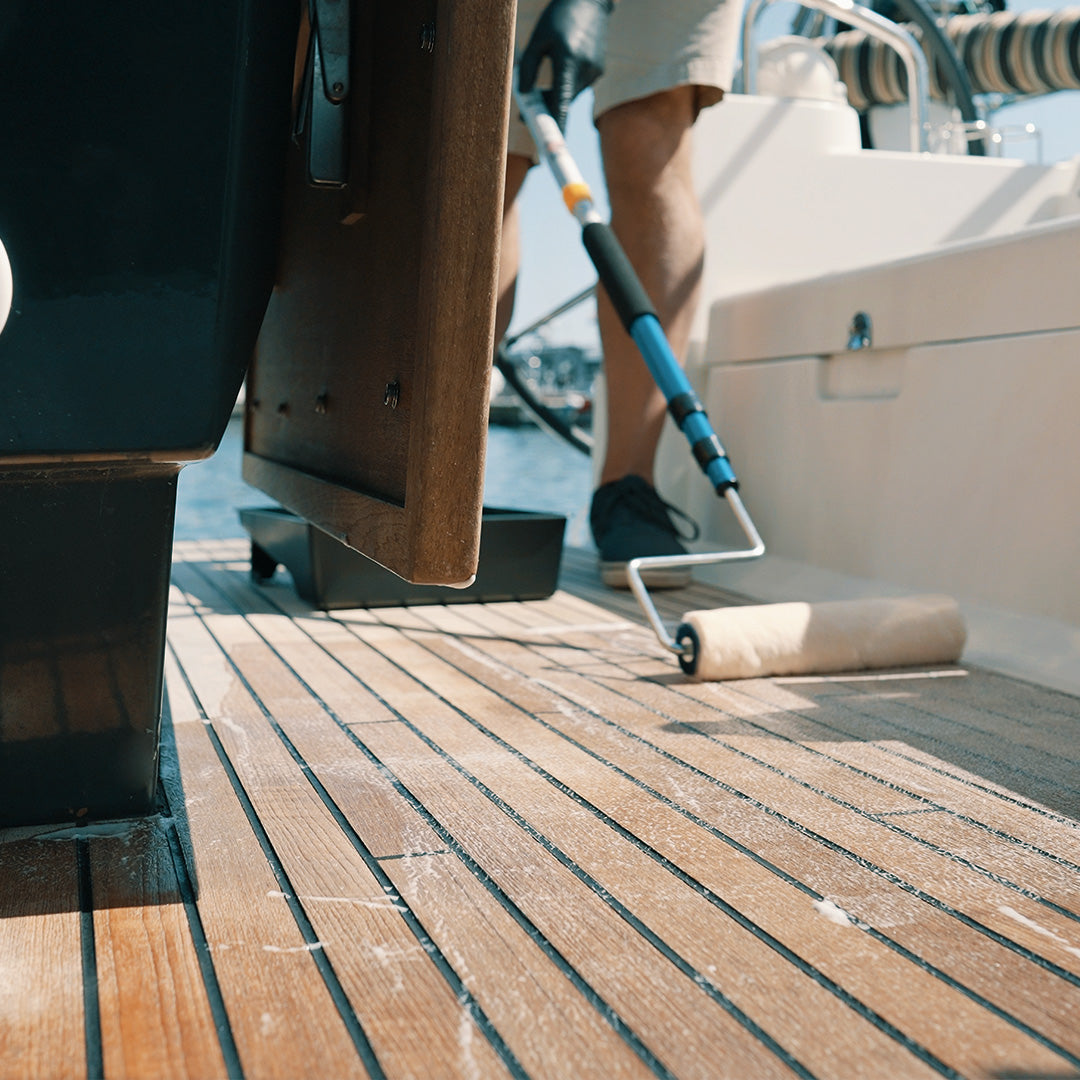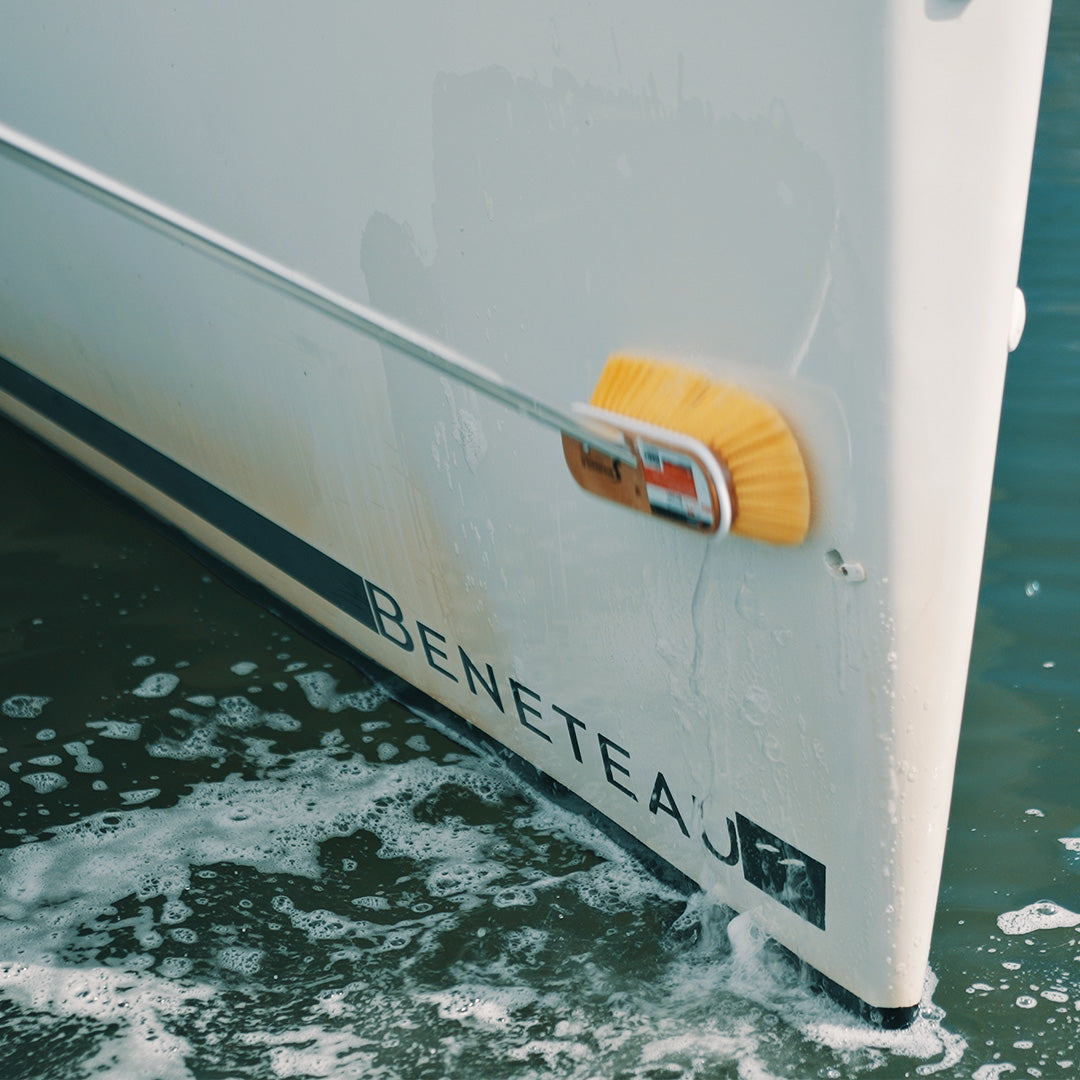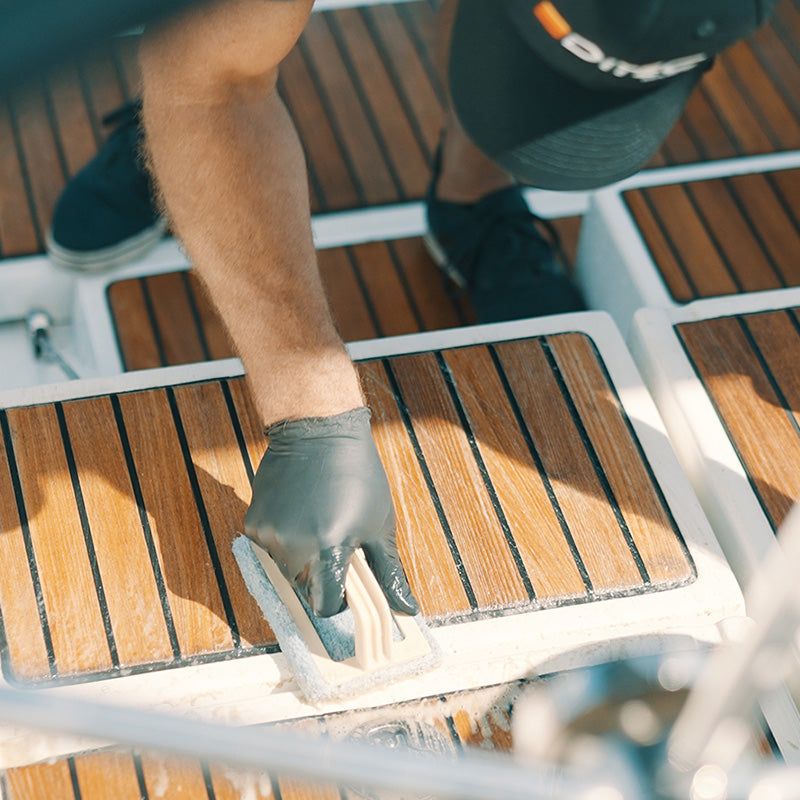



When people think about pollution, they picture oil spills or industrial dumping. Boat cleaning feels small by comparison, but the impact adds up faster than most boaters realize.
The Stats
A typical recreational boat wash uses anywhere from 15 to 40 gallons of water, depending on boat size and whether a hose is used continuously. Many boat owners clean their boats 10 to 20 times per year, especially during peak season. That puts a single boat’s annual wash runoff somewhere between 150 and 800 gallons.
That water doesn’t go to a treatment plant. It drains directly into the marina basin, lake, river, or coastal waterway. Now picture that runoff spreading across the surface. Just 100 gallons of water can form a thin sheen across more than 1,500 square feet. Multiply that by hundreds or thousands of boats in a marina, and you’re no longer talking about a small, isolated event. You’re talking about entire docks and basins repeatedly exposed to whatever chemicals are in those cleaners.
The Effects
Conventional boat cleaning products often contain surfactants and solvents designed to cling to grease, oxidation, and organic growth. When those chemicals enter the water, they don’t simply dilute into nothing. Surfactants lower surface tension, which interferes with the natural gas exchange at the water’s surface. That means less oxygen entering the water, especially in calm, enclosed marinas.
Reduced oxygen levels stress fish and invertebrates first. Eggs and larvae are particularly vulnerable. Some cleaners also contain compounds that are toxic to algae and plankton, the base of the aquatic food web. When those populations are disrupted, the effects ripple outward, reducing food availability for larger species and destabilizing the ecosystem over time.
The damage isn’t always dramatic or immediate. It’s cumulative. Repeated exposure week after week can lead to dead zones in poorly flushed marinas, algae imbalances, and long-term sediment contamination. Once chemicals bind to sediment, they can persist for years, continuing to affect bottom-dwelling organisms even after surface water appears clean.
The Solution
Eco-friendly, readily biodegradable boat cleaning products dramatically change this equation. These formulations are designed to break down quickly once they enter the water, often within hours or days rather than months. Instead of accumulating on the surface or settling into sediments, they decompose into compounds that aquatic microorganisms can process without harm.
The difference is measurable. Lower toxicity means plankton recover faster. Faster recovery means stable oxygen levels. Stable oxygen supports healthier fish populations and cleaner water overall. In practical terms, that translates to clearer marinas, fewer fish kills during hot months, and less long-term damage to sensitive waterways.
When you look at the numbers, the choice becomes clearer. One boat might seem insignificant, but boating is a shared environment. Every gallon of runoff contributes to the same body of water. Choosing eco-friendly products reduces the chemical load introduced with every wash and helps protect the places boaters depend on.
At DiTEC, this is why readily biodegradable cleaning formulations matter—not as a marketing claim, but as a real way to limit cumulative harm. Clean boats don’t have to come at the expense of clean water. The chemistry you choose makes that possible.